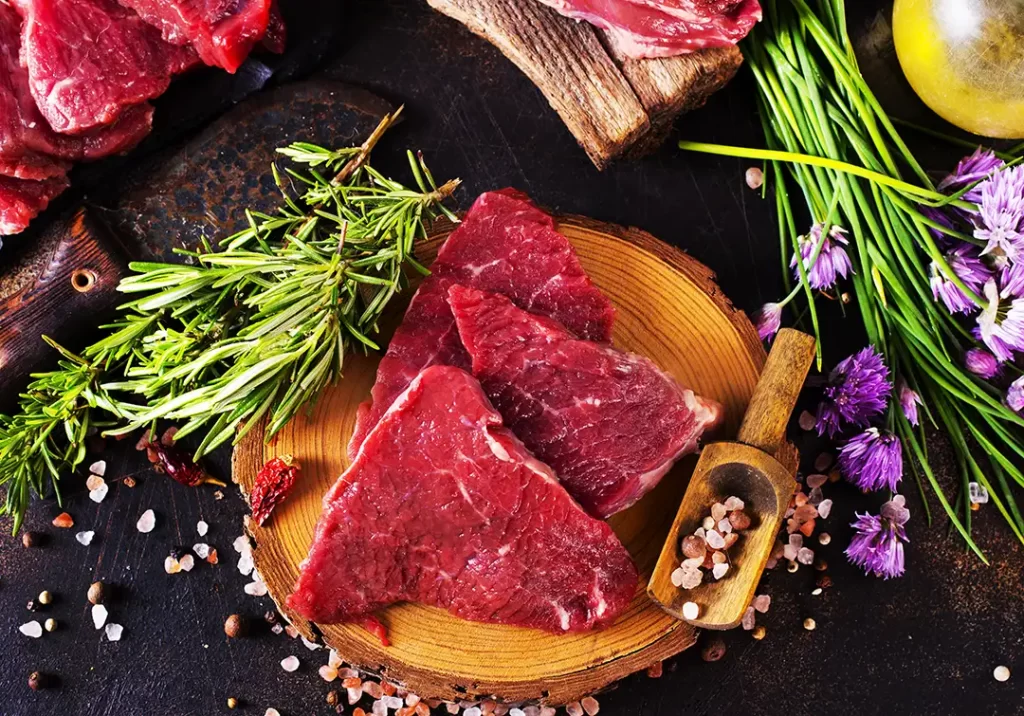
Beef is meat from a cow. It reigns supreme on the food table in the form of roasts, roulades or steak. It is a noble meat, very popular with consumers and chefs for its taste. It is one of the most nutritionally valuable meats with a medium fat content and a high content of easily digestible protein and vitamins B12, B1 and B6, phosphorus, iron and zinc.
The distinctive taste of beef is associated with a high level of so-called precursors, i.e. substances that react with other ingredients during heat treatment, thanks to which dishes gain a rich taste and aroma. However, beef has a particularly large number of popularity due to the structure of the meat and the age of the slaughtered animals.
The Americans have the longest traditions in breeding beef cows. They ensure that the meat is of the highest quality by working on new cross breeds of meat breeds and by observing strict standards regarding breeding conditions, feed and medicines, and maturing, packaging and storing beef.
Is it worth eating beef?
There are many theories about red meat. According to one, beef should be limited or completely eliminated from the diet. Others claim that it is necessary for the proper functioning of the body. So, what is the truth?
Meat, along with other animal products (e.g. milk, cheese), is the best source of complete protein. It contains all the essential amino acids, i.e. those that the body cannot produce itself and which are needed to build tissues. It also has the advantage of being more digestible than plant protein. Lean meat, such as beef tenderloin or sirloin, provides the most protein.
Beef also provides minerals. It is unrivaled in terms of iron content. Beef is also rich in creatine, which increases muscle volume and mass, as well as physical performance and fitness. That is why red meat is an essential element in the diet of every athlete. Beef also contains L-carnitine, large amounts of vitamin B6 – which improves metabolism, and vitamin B12, which, among other things, protects nerve cells.
Despite the high protein and mineral content, red meat, including beef, should not be the basis of the diet but only a supplement. It is recommended that an adult consume up to two portions of red meat per week.
Types of beef
🥩 Loin
The noblest and most tender part of beef is loin. The best (and most expensive) for steaks. Beef loin is one of the most prized sections of beef, known for its tenderness and rich flavor. It includes popular cuts like sirloin, T-bone, and strip steak, perfect for grilling or roasting.
🍖 Roast beef
Together with tenderloin, it is part of T-bone steaks. Slightly tougher than tenderloin and equally tasty in the form of steaks.
🐮 Shoulder
Relatively fatty meat with a large amount of connective tissue, making it suitable for roasting and stewing.
🔥 Entrecote
Fatty meat with a distinct flavor. It works great for frying or grilling in the form of steaks and also ground into hamburgers. Entrecote with bone is ideal for roasting.
🥣 Brisket and flank
You can prepare tasty broth or steak from them by marinating the meat first.
🔪 Cushion
Very lean meat, as the name suggests, perfect for roulades.
Nutrition Value of Beef meat
Fresh beef is a rich source of high-quality protein, essential vitamins, and minerals that support muscle growth and overall health. Below is a table outlining the typical nutritional value of 100 grams of fresh, lean beef (cooked, without added fat).
| Nutrient | Amount per 100g | % Daily Value (DV) |
|---|---|---|
| Calories | 250 kcal | 13% |
| Protein | 26 g | 52% |
| Total Fat | 17 g | 26% |
| • Saturated Fat | 7 g | 35% |
| • Monounsaturated Fat | 7 g | — |
| • Polyunsaturated Fat | 0.5 g | — |
| Cholesterol | 80 mg | 27% |
| Iron | 2.6 mg | 14% |
| Zinc | 6.0 mg | 40% |
| Vitamin B12 | 2.5 µg | 104% |
| Vitamin B6 | 0.4 mg | 20% |
| Niacin (B3) | 4.0 mg | 25% |
| Phosphorus | 200 mg | 20% |
| Selenium | 25 µg | 45% |
| Potassium | 330 mg | 9% |
| Sodium | 72 mg | 3% |
🔎 Note: Values can slightly vary depending on the beef cut and how it is cooked (grilled, roasted, boiled, etc.). This table refers to trimmed lean beef, broiled or roasted.
Different types of meat offer varying nutritional profiles, making it important to compare them for a balanced diet. Here’s a comparison of the nutritional value of 100 grams of cooked, lean beef, chicken breast, and lamb.
| Nutrient | Beef (Lean, Cooked) | Chicken Breast (Skinless, Cooked) | Lamb (Lean, Cooked) |
|---|---|---|---|
| Calories | 250 kcal | 165 kcal | 250 kcal |
| Protein | 26 g | 31 g | 25 g |
| Total Fat | 17 g | 3.6 g | 17 g |
| • Saturated Fat | 7 g | 1 g | 7.5 g |
| Cholesterol | 80 mg | 85 mg | 97 mg |
| Iron | 2.6 mg | 1.0 mg | 1.9 mg |
| Zinc | 6.0 mg | 1.0 mg | 4.0 mg |
| Vitamin B12 | 2.5 µg | 0.3 µg | 2.6 µg |
| Vitamin B6 | 0.4 mg | 0.6 mg | 0.2 mg |
| Phosphorus | 200 mg | 220 mg | 200 mg |
| Sodium | 72 mg | 74 mg | 70 mg |
| Potassium | 330 mg | 256 mg | 310 mg |
✅ Note: All values are approximate and can vary depending on the cut, preparation method, and cooking style.
3 simple tips to help you buy high quality fresh beef!
Good quality fresh beef is the basis for preparing steaks, goulash, tartare and many other dishes. Unfortunately, beef available in grocery stores often does not look appealing. How to recognize good beef and be sure of high quality meat? Learn the following 3 tips that will make every beef purchase you make a hit!
You go to the butcher shop and look for good quality fresh beef, but you have doubts when you pick up a package of beef? What should catch your eye?
1. Beef Color - Look Closely
Beef from young cattle should be light red. Sometimes it can be dark red, because the meat darkens quickly when exposed to oxygen – but this should not affect its taste. If you notice that the meat is more brown than red, it is a sign that it is not fresh. The same will happen if you notice spots on it.
Vacuum-packed beef may have a darker color. This is the result of a natural oxidation process. After opening the package and coming into contact with oxygen, the meat will return to a lighter, red color after a few minutes.
Beef fat should also have a specific color – preferably cream. If its shade is darker, you have the right to suspect that the meat comes from older cattle. The color of beef fat does not change even during seasoning.
2. The smell of beef
This is the easiest way to check if the beef is of good quality, although it is hard to expect that a butcher shop will do this type of test. Nevertheless, it is worth knowing that the smell of fresh beef is very delicate. A stronger smell (especially slightly sour) should alarm you.
Choose the Best Cuts, Taste the Difference!
3. Moisture and texture of beef
Fresh beef should be elastic and slightly shiny. Its structure is also characteristic. Beef is quite hard to the touch, its consistency should fall apart slightly when squeezed, but after a while it should return to its original state.
When a trace after pressing remains on the beef for a longer time, it is a sign that the meat is not of the highest quality. Similarly, when juice comes out of it after pressing.
If you want to be 100% sure about the quality of the beef you buy, you can choose a product that has a quality level designation guaranteed. Always buy such beef packaged. Firstly, you will find information about the quality class of the selected piece of meat on the label, secondly, vacuum-packed beef matures all the time, which means it becomes increasingly tender and delicate.
Where To Buy Fresh Beef in Plano, TX?
When you think of a high-quality fresh beef store, the first supermarket you come across probably doesn’t come to mind. Although some delicatessens and retail chains already offer high-quality beef. However, the most convenient and fastest way is to buy from a proven, specialized online butcher store.
So, you should try to find a good butcher or local meat supplier whom you can ask about the freshness of the meat. Use this opportunity and ask about, for example, the type of beef, its freshness, and even what is best to prepare from it. If you don’t have a local beef supplier, rely on your senses when choosing meat:
- First, assess the color of the meat. Fresh meat has a uniform, red color, sometimes it can be slightly darker, but it cannot have dark blue or greenish spots.
- The fat on the meat should be firm and light cream in color.
- The smell of fresh beef is always natural, pleasant, and meaty.
The surface of the meat is never sticky. Fresh beef is slightly springy and you won’t make a permanent dent in it, because the meat will return to its shape.
Is buying meat online a good idea?
An online butcher shop is a great place to buy high-quality beef. You can order fresh beef quickly and conveniently without leaving your home. Remember that the most important thing is to order from a specialized shop.
One that deals with premium meat and has experience in selecting the highest quality products. It will also guarantee appropriate cooling protection of the product during delivery. The beef shop Plano Halal Meat is the right address if you are looking for high-quality, guaranteed quality fresh beef. So, why should you choose our butcher shop? Because:
- We offer premium meats that are characterized by high quality, mainly beef.
- You can be sure that the meat comes from reliable suppliers and is carefully selected.
- You can be sure that you will receive meat properly packaged and secured, and at the same time you can count on advice from experts if you have any questions.
- We have specialized in premium meat for many years.
A delicious steak or maybe a grilled beef burger? Even the best recipe will turn out to be a dud when you buy average quality meat. Do not risk and choose consciously.
🔍 Advice!
Let beef sit at room temperature for a while before cooking instead of heating it straight from the fridge. You can achieve the best effect by bringing the beef to room temperature before cooking. A smaller temperature difference between the outside of the meat and its center allows you to avoid a situation where the meat is burnt on the outside and still raw in the middle.
frequently asked questions (FAQs) about fresh beef
What are the nutritional benefits of eating fresh beef from Plano Halal Meat?
Fresh beef is a great source of high-quality protein, iron, zinc, vitamin B12, and creatine. At Plano Halal Meat, our beef is carefully selected to ensure top-tier nutrition, helping support muscle growth, improve metabolism, and maintain overall health.
How can I tell if beef is fresh before buying it?
To check beef freshness, look for a bright red or light red color, a subtle meaty smell, and a firm yet elastic texture. Plano Halal Meat only sells beef that meets these high standards of freshness and quality.
What are the different types of beef cuts available at Plano Halal Meat?
Plano Halal Meat offers various premium beef cuts such as loin, roast beef, entrecote, brisket, flank, shoulder, and cushion. Each cut is ideal for specific cooking methods like grilling, roasting, or stewing.
How often should I include red meat like beef in my diet?
Experts recommend consuming red meat like beef 1–2 times per week. At Plano Halal Meat, our lean beef cuts—like sirloin and tenderloin—are a smart choice for a balanced diet, especially for those seeking high protein and iron intake.
Is it safe and convenient to buy fresh beef online from Plano Halal Meat?
Yes, buying beef online from Plano Halal Meat is safe and convenient. We ensure proper vacuum packaging, cooling, and fast delivery to maintain meat quality and freshness. You can order premium halal beef with confidence.